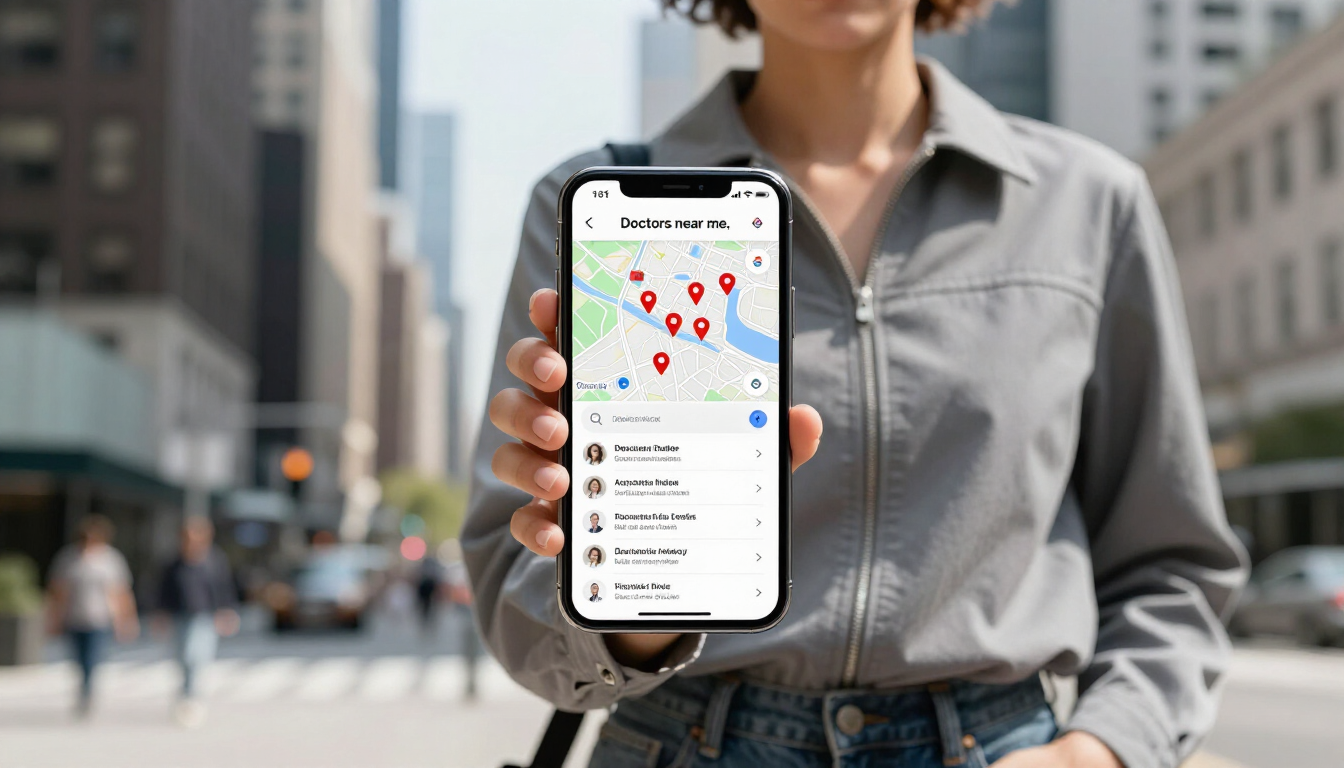
When someone searches for a healthcare provider, they often search locally.
They type things like:
- Doctor near me
- Med spa near me
- Pediatrician near me
- Therapist near me
- Mental health provider near me
- Weight loss clinic near me
- Chiropractor near me
- Dentist near me
If your practice does not appear in those searches, new patients may never find you.
Local SEO helps your practice become more visible when people search by location, specialty, or urgent need.
For healthcare practices, local SEO is one of the most important parts of patient acquisition.
What Is Local SEO?
Local SEO is the process of improving your online presence so your business shows up in local search results.
This includes:
- Google Business Profile
- Google Maps
- Local keywords
- Website location pages
- Service pages
- Reviews
- Directory listings
- Name, address, and phone consistency
- Local content
- Mobile experience
The goal is simple: help patients find your practice when they are searching for care nearby.
Why Local SEO Matters for Healthcare Practices
Patients usually do not want to search forever. They want a provider they can trust, contact, and book.
When your practice appears in local search, you have a better chance of receiving:
- Phone calls
- Appointment requests
- Website visits
- Direction clicks
- Insurance questions
- Consultation inquiries
- New patient opportunities
Local SEO is especially important for practices that serve a specific city, county, or region.
Step 1: Optimize Your Google Business Profile
Your Google Business Profile is often the first impression patients see.
It should be complete, accurate, and built around your services.
Important areas to optimize:
- Business name
- Primary category
- Secondary categories
- Address or service area
- Phone number
- Website URL
- Appointment link
- Hours
- Services
- Business description
- Photos
- Reviews
- FAQs
- Updates
Many practices create a profile and forget about it. That is a mistake.
Your profile should be treated like a major marketing asset.
Step 2: Use the Right Healthcare Categories
Google categories help search engines understand what your practice does.
A mental health practice, med spa, pediatric practice, or weight loss clinic should not use vague categories if more specific options are available.
Your category choices should align with your core service.
Examples may include:
- Medical clinic
- Mental health service
- Psychiatrist
- Nurse practitioner
- Psychotherapist
- Medical spa
- Pediatrician
- Weight loss service
- Dental clinic
- Chiropractor
- Physical therapy clinic
The right category helps connect your practice to the right searches.
Step 3: Build Strong Service Pages
Your website should not have one generic services page only.
Each important service should have its own page.
Examples:
- Anxiety Treatment
- Depression Treatment
- Medication Management
- Telehealth Mental Health Services
- Botox
- Dermal Fillers
- Medical Weight Loss
- Pediatric Care
- Sports Physicals
- Chiropractic Adjustments
- Physical Therapy
Each page should explain:
- What the service is
- Who it helps
- What patients can expect
- Why your practice is trusted
- Where you provide the service
- How to request an appointment
Service pages help both Google and patients understand your practice.
Step 4: Create Location Pages
If your practice serves multiple cities, location pages can help.
For example:
- Mental Health Provider in West Palm Beach
- Med Spa in Fort Lauderdale
- Pediatrician in Coral Springs
- Weight Loss Clinic in Delray Beach
- Chiropractor in Boca Raton
Each location page should be unique. Do not copy and paste the same page with only the city name changed.
A strong location page may include:
- City-specific headline
- Services offered in that area
- Who you help
- Nearby communities served
- FAQs
- Appointment CTA
- Local trust signals
This helps patients feel like your practice is relevant to their area.
Step 5: Get More Reviews
Reviews help patients make decisions.
A strong review profile can improve trust and influence whether someone calls your office.
Your practice should have a review request process that is:
- Consistent
- Professional
- Compliant
- Easy for patients
- Respectful of privacy
You should never pressure patients or expose private health information in responses.
A simple review system can help your practice grow trust over time.
Step 6: Keep Business Information Consistent
Your name, address, and phone number should be consistent across the web.
This includes:
- Google
- Bing
- Apple Maps
- Yelp
- Healthgrades
- Zocdoc
- WebMD
- Psychology Today, if relevant
- Insurance directories
- Local directories
- Social media profiles
Inconsistent information can confuse patients and search engines.
If one listing has an old phone number and another has the correct number, you may lose leads.
Step 7: Publish Helpful Local Content
Local content helps your practice rank for more patient questions.
Examples:
- “How to Choose a Mental Health Provider in West Palm Beach”
- “What to Know Before Booking a Med Spa Consultation”
- “Best Questions to Ask a Pediatrician Before Your First Visit”
- “Telehealth Mental Health Services in Florida”
- “How Local Patients Search for Medical Weight Loss Clinics”
The goal is not to publish random blogs. The goal is to answer questions that patients actually search.
Step 8: Make the Website Mobile-Friendly
Most local searches happen on mobile devices.
If someone finds your practice but the website is hard to use on a phone, they may leave.
Your mobile website should include:
- Fast load time
- Click-to-call button
- Easy appointment request
- Clear service menu
- Simple contact form
- Location information
- Strong headline
- Clean layout
Mobile experience can directly affect patient inquiries.
Step 9: Track Calls and Forms
Local SEO should be measured.
You should track:
- Website visits
- Google Business Profile actions
- Phone calls
- Contact forms
- Appointment clicks
- Direction clicks
- Search terms
- Ranking improvements
- Lead quality
Without tracking, you cannot know whether your local SEO is improving patient acquisition.
Local SEO Is Included in BrandiketMAX
BrandiketMAX includes local visibility support because patients need to find you before they can book.
Depending on your package, BrandiketMAX may include:
- Local SEO foundation
- Google Business Profile optimization
- Website hosting and maintenance
- Service page optimization
- Landing page optimization
- Citation building
- Review request workflow
- Monthly reporting
- Google Ads
- Meta Ads
- Email marketing
- Social media content
The goal is to create a connected system that helps your practice get found, trusted, and contacted.
Final Thought
If your practice is not visible when patients search near you, you are losing opportunities.
Local SEO helps your practice show up where patient decisions begin: Google Search and Google Maps.
The sooner your practice improves local visibility, the sooner you can start building a stronger patient acquisition system.
Want a free local SEO audit?
Comment “SEO,” send us a message, or visit
brandiket.com.
You can also call
(954) 951-1680.